Ta dah!
Here we are at the final section of the list, the crème de la crème, the icing on the cake, etc. etc. And now, too, the recriminations can begin about authors I've left off the list—bring 'em on! I think you'll agree, though, that the Top 10 is contains a lot of great books, and there might even be a bit of a surprise about my choice for #1. These books are all favorites of mine, but, more importantly for our purposes here, all have solid fan bases and some hefty advocates in the world of bloggers, critics, and even, in many cases, academia. It's shocking for me to think that one of these books is inexplicably out of print (though readily available second hand), and even the #1 title was only rediscovered in the past decade or so. How much the literary landscape of women writers has changed in only a few years!
Here we are at the final section of the list, the crème de la crème, the icing on the cake, etc. etc. And now, too, the recriminations can begin about authors I've left off the list—bring 'em on! I think you'll agree, though, that the Top 10 is contains a lot of great books, and there might even be a bit of a surprise about my choice for #1. These books are all favorites of mine, but, more importantly for our purposes here, all have solid fan bases and some hefty advocates in the world of bloggers, critics, and even, in many cases, academia. It's shocking for me to think that one of these books is inexplicably out of print (though readily available second hand), and even the #1 title was only rediscovered in the past decade or so. How much the literary landscape of women writers has changed in only a few years!
In a few days, I'll post a concise, complete version of the list, to make it easier to look over (or to print). But in the meantime, if you're looking to explore middlebrow fiction for the first time, you
really couldn't (in my humble opinion) do better than to start with the titles
in this post.

10) DODIE SMITH, I Capture the Castle (1948)
Written partly during World War II but set in the years before it, this
novel is part eccentric family tale, part romance, and part purely delightful.
Like many of the authors on this list, I read it before I started blogging, so I've never written about it in depth. But New Republic published a piece about it here.
In print from St. Martin's in the U.S. and Vintage in the U.K.

9) E. H. YOUNG, Miss Mole (1930)
Funny and touching, with an unexpectedly sympathetic heroine—damaged,
outspoken, a bit paranoid, sometimes dishonest, yet charmingly able to
appreciate the little joys of life—is a subtle and unflinching, yet terribly
entertaining novel. I wrote a bit about it here,
and Simon at Stuck in a Book reviewed it more thoroughly here. Hideously, criminally
out of print, but old Virago editions are fairly readily available.

8) ELIZABETH BOWEN, The Heat of the Day (1948)
The Atlantic Monthly wrote of
it: "Imagine a Graham Greene thriller projected through the sensibility of
Virginia Woolf." Which rather sums it up. And Anthony Burgess added, “No
novel has better caught the atmosphere of London during the second world war.”
One of the my two or three favorite examples of "Blitz lit." The Guardian chose it as one of its 100
best novels here.
In print from Anchor in the U.S. and Vintage in the U.K.

7) D. E. STEVENSON, Miss Buncle's Book (1934)
I've read it three times and each time it gets better. The irresistible
story of Miss Buncle, who publishes a pseudonymous novel about residents of her
village and then must try not to be unveiled as the author when the whole
village gets up in arms. Witty and charming, but also sharp and observant. Book
Snob reviewed it here.
In print from Persephone in the U.K. and Sourcebooks in the U.S.

6) ELIZABETH TAYLOR, A Game of Hide and Seek (1951)
A story of star-crossed lovers, but told in Taylor's inimitable
funny/tragic style. There's enough brilliance here for several novels by most
authors, but Taylor compresses it into one gorgeous little diamond. The New York Times has an old but perceptive
article about Taylor's work in general, but with a section devoted to this
novel, here.
In print from New York Review Books Classics in the U.S. and Virago in the U.K.

5) F. M. MAYOR, The Rector's Daughter (1924)
The most tragic of my top ten titles and one of my favorite novels, period,
this tale of a spinster's one chance at love is the very best kind of
tragic—strangely uplifting and with profound insights into love and loneliness.
Harriet Devine reviewed it here,
and novelist Susan Hill called it a masterpiece. In print from Virago.
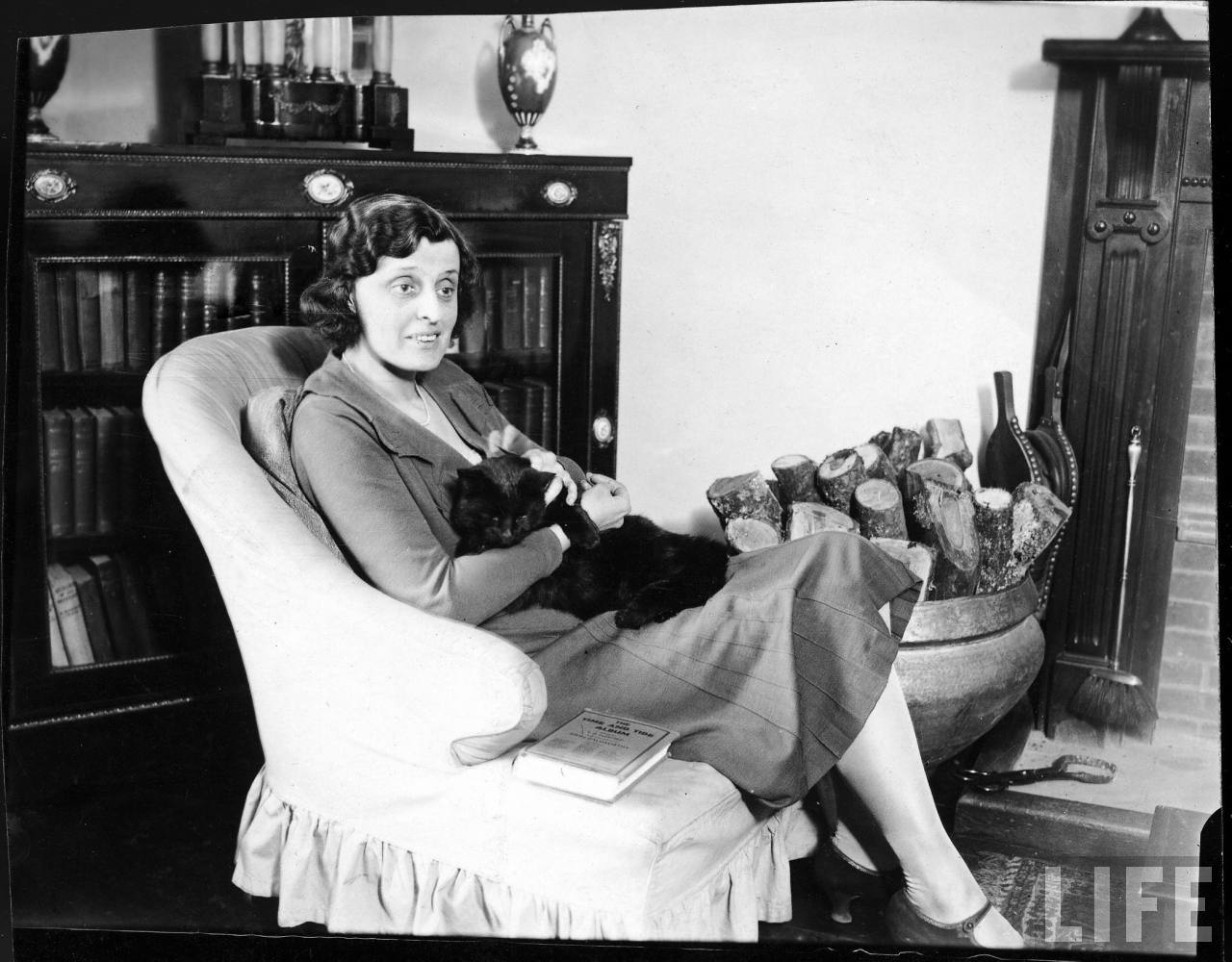 |
| E. M. Delafield |
4) E. M. DELAFIELD, Diary of a Provincial Lady (1930)
Probably one of only a few titles on this list that's never been out of
print since it first appeared, and one of the best-loved. The first of four
fictional diaries, loosely based on Delafield's own life, by a wife, mother,
and—in later volumes—successful author, trying hilariously and self-effacingly
to balance family, servants, and literary life. Jilly Cooper wrote about it in The Guardian, here. In print from Persephone and in other
editions.
 |
| Barbara Pym |
3) BARBARA PYM, Excellent Women (1952)
I was tempted to go with A Few
Green Leaves or the beautifully melancholy Quartet in Autumn, but let's face it—this is the book that has kept
Pym's writing alive and become, appropriately or not, representative of her
work. Funny, snide, and layered with careful observation. Alexander McCall
Smith wrote about it here.
In print from Penguin in the U.S. and Virago in the U.K., paperback and e-book.

2) SYLVIA TOWNSEND WARNER, Lolly Willowes (1926)
I bet a lot of you thought this would be my #1, but I like to keep you
on your toes. It's certainly my #1—a
delightfully interpretable, funny, profound, poignant tale of a
"superfluous woman" who heads to a small village and becomes a witch.
Read it, and then read it again. I raved about it here
(in my very first review), but if you don't believe me Leaves & Pages just
reviewed it this year in similarly glowing prose (see here),
and I just stumbled across this brilliant 1985 assessment of Warner in The New York Review of Books here.
In print from Virago in the U.K. and New York Review Books Classics in the
U.S., paperback and e-book.
And now, drum roll please...
...
...
And now, drum roll please...
...
...
 |
| Marghanita Laski |
1) MARGHANITA LASKI, The Village (1952)
Obviously, there's no way to choose the "#1" British feminine middlebrow novel in any definitive way, but this one floated to the top of my list almost as soon as it came to
mind during my initial brainstorming, even ahead of several other novels in the
top 20 that might have held this spot. I went with it because here Laski demonstrates
so beautifully how middlebrow concerns can make pure, brilliant, socially-conscious, yet completely
entertaining literature. Filled with class and gender insights, and offering a
vivid view of life in the time just after the end of World War II, it has my
vote as one of the best books Persephone has rescued from obscurity. Books and
Chocolate reviewed it here.
In print from Persephone.
So, what did I leave out, and what did I get wrong?
So, what did I leave out, and what did I get wrong?
